
Bench Warrants in Oscoda County
A bench warrant tells police to arrest someone who ignored what the court required. A missed hearing is the usual cause. Contempt, a broken release condition, an unpaid obligation, or a probation violation can produce one too, and Oscoda County judges treat each trigger the same way. Michigan's court rules control the timing. On a first failure to appear in a criminal case, the rule generally gives the person 48 hours to come in voluntarily before a bench warrant issues, and only hours when the court is open count. The exceptions matter. An immediate warrant is allowed for assaultive or domestic violence charges, a prior failure to appear, a new crime, danger to a person, or sentencing.
The Oscoda County Bench Warrant 48-Hour Rule
The rule is real but narrower than internet summaries claim. The 48 hours skip weekends and holidays when the court is closed. They also run from the missed appearance itself, not from when a person learns of it. Exceptions matter more than the rule. If any listed circumstance applies, an Oscoda County judge can issue the bench warrant at once and state the reason on the record. Treat the window as a reason to call the clerk that same morning, not as a guaranteed grace period.
Note: Never rely on a generic rule article. Ask the court what happened in your case and what it wants next.
How an Oscoda County Bench Warrant Is Issued
Everything starts inside the court file. An Oscoda County judge can issue a bench warrant on the court's own motion, and no separate motion or affidavit is needed there. When a party asks for one instead, the request arrives as a motion with an affidavit describing the failure. Michigan uses a statewide bench warrant form. It collects the court and case number, the failure to appear or contempt reason, the identifiers the law enforcement entry needs, the bond amount, and the officer's return. Once the judge signs, the clerk enters it. The entry then goes into the state network, so any officer in Oscoda County can act on it.
The MC 229 Bench Warrant Form in Oscoda County
Most local bench warrants trace back to the MC 229 form, and its field blocks show exactly what a clerk can read back to you. The top holds the court, the case number, the judge, and an agency code. The middle records the current charge and the failure that triggered the request. Below that sit the person's identifying details, the bond amount, and the judge's signature. The form notes that DOB, sex, and race are required for the law enforcement entry, while other physical descriptors merely help. None of that detail belongs in a public summary.
Bench Warrant vs Arrest Warrant
On paper they look alike, yet they start very differently. One punishes a failure inside an existing case; the other opens a new one.
| Point | Bench Warrant | Arrest Warrant |
|---|---|---|
| What triggers it | A missed date, contempt, or a broken condition | A sworn complaint and a reasonable cause finding |
| Which court | The court already handling the case | District court, or circuit after bindover |
| Typical response | Show cause hearing, bond, or a recall motion | Arraignment, counsel, and a release decision |
Oscoda County court materials do not use the term capias pro fine. A traffic failure can move through a show cause order and then a bench warrant. It can also trigger a separate license suspension.
Why an Oscoda County Show Cause Order Often Comes First
For a missed misdemeanor appearance ticket, the rule points to an order to show cause rather than an immediate warrant. The order tells the person to come in and explain the failure. A bench warrant can still issue right away when the court finds a new crime, a willful attempt to delay, or a danger to a person or property, and the reason must be stated. That means the first paper you get may not be a warrant at all. Read it closely and call the number printed on it. Ignoring a show cause order is how a small Oscoda County problem turns into an active warrant.
How to Resolve an Oscoda County Bench Warrant
Everything runs through the issuing court, in a fixed order. Skip a step and you will usually make a second trip.
- Identify the court and the missed date from the docket, an old notice, or the clerk.
- Call before appearing: district 989-826-1105 or 989-826-1106, circuit 989-826-1111, Friend of the Court 989-826-3548.
- Ask whether the court accepts a voluntary appearance, wants a motion to recall or quash, or has set a show cause date.
- Confirm the bond, if any. Cards go through Government Payment Services at 1-888-604-7888 using district code 1520 or circuit code 6393; the courthouse takes cash, money orders, and certified checks.
- Get the next date and the written order, then ask when the police record updates.
Caution: A payment, a posted bond, or a filed motion does not recall a warrant by itself. The court must enter the order.
Oscoda County Support Warrants and the FOC 14 Form
Support enforcement uses its own paperwork. The FOC 14 form covers a bench warrant for missing a support contempt hearing or failing to satisfy a stayed commitment order. It carries the same court and case blocks, plus a cash performance bond amount that can release the person until the next session. For compliance questions, payments, and hearing dates, call the local Friend of the Court office at 989-826-3548. Sheriff staff can explain service, but they cannot change the support order.
Which Oscoda County Court Issued It
Most bench warrant confusion here is really about which court owns the file. Oscoda County has no city court and no justice of the peace court. That removes a whole layer of guessing.
| Court | What It Handles | Contact |
|---|---|---|
| 81st District Court | Misdemeanor, traffic, civil infraction, and preliminary examination matters | 105 S. Court St., Mio; 989-826-1105 |
| 23rd Circuit Court | Felony, family, juvenile, and circuit appeals | 105 Court St., Mio; 989-826-1111 |
| Friend of the Court | Support enforcement and support contempt | 105 Court St., Mio; 989-826-3548 |
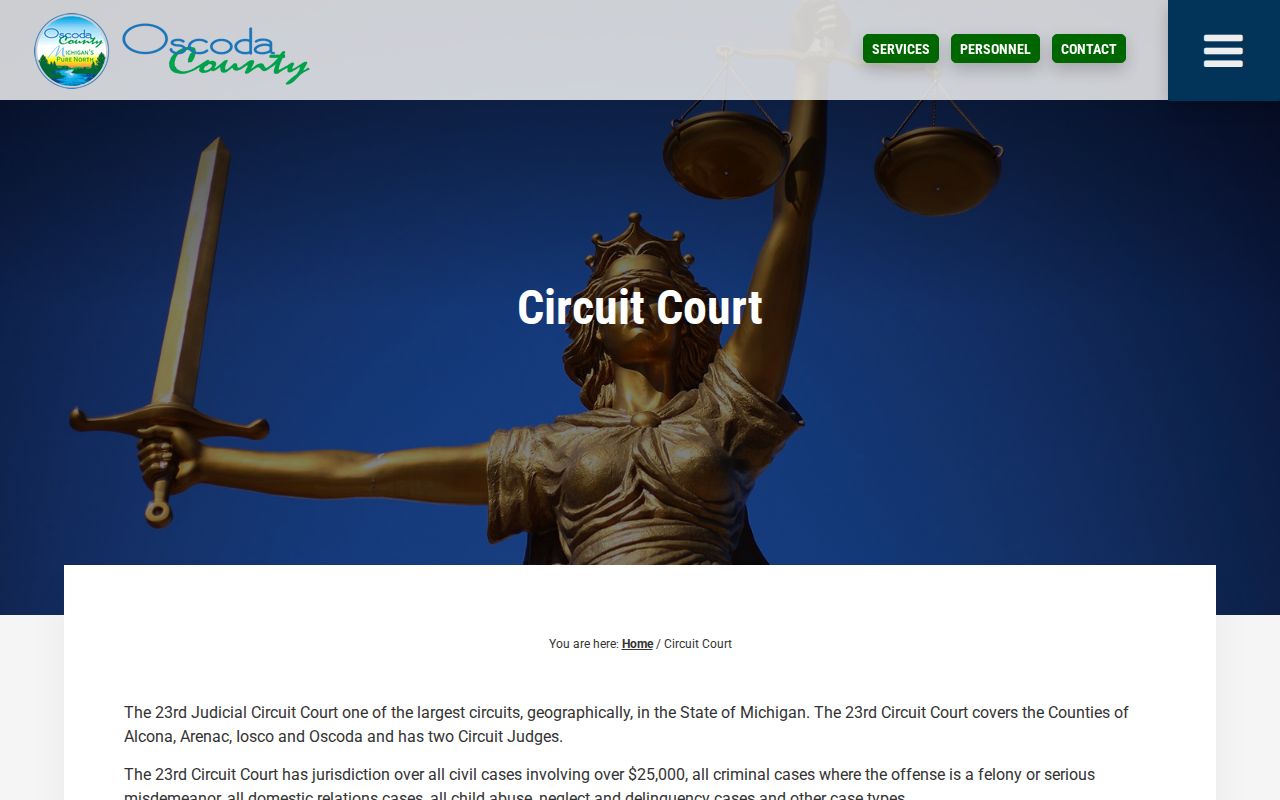
The circuit court page above lists the central filing office and the trial court administrator. It is the right starting point when a felony or family file is involved. A case that began as a district matter can move up after a preliminary examination.
What to Have Ready Before You Call the Clerk
A quick call to the Oscoda County clerk works best with your details in hand. Gather them first.
- The legal name on the case, plus any name used at filing.
- The birth year, used to separate similar records.
- The case number, citation number, or the date you missed.
- The matter type: traffic, misdemeanor, felony, probation, or support.
- Whether you have counsel, and how the court can reach you.
Then ask the Oscoda County court three things in order. Is the warrant active, what does the court want next, and what paperwork proves the matter is clear?